
What Causes Brand Confusion in Growing Businesses?
Many business owners don’t set out to create a confusing brand.
In fact, most begin with a clear vision, a strong sense of purpose, and a genuine desire to help their clients.
Yet as businesses grow, something often starts to shift.
The messaging becomes inconsistent.
The services become harder to explain.
Marketing feels disconnected.
And what once felt clear begins to feel increasingly difficult to articulate.
I’ve seen this happen across businesses at different stages of growth.
What worked in the early days no longer reflects where the business is today.
The challenge isn’t usually a lack of effort.
It’s that the brand has evolved, but the underlying strategy hasn’t evolved with it.
Brand Confusion Rarely Happens Overnight
Brand confusion is rarely the result of a single decision.
More often, it develops gradually.
A business adds new services.
Expands into new markets.
Attracts different types of clients.
Builds a larger team.
Responds to new opportunities.
Each change makes sense in isolation.
But over time, these changes can create a growing gap between what the business does and how it communicates its value.
Eventually, even the business owner begins to struggle with questions such as:
- What do we actually want to be known for?
- Who are our ideal clients today?
- How do we explain everything we offer?
- What makes us different from competitors?
These are often signs that the brand has outgrown its original positioning.
1. Growth Has Outpaced Strategy
One of the most common causes of brand confusion is growth.
The business evolves.
The brand doesn’t.
Many businesses continue using messaging created when they first launched, despite the fact that their expertise, services, and audience have changed significantly.
What once felt accurate now feels limiting.
The result is a disconnect between the business that exists today and the brand being presented to the market.
This often shows up as:
- Outdated website messaging
- Unclear service descriptions
- Inconsistent marketing
- Difficulty explaining the business
Growth creates complexity.
Strategy creates clarity.
2. Trying to Speak to Everyone
As businesses grow, there can be a temptation to broaden the message.
The intention is understandable.
If we appeal to more people, surely more opportunities will follow.
But broad messaging often creates the opposite effect.
When businesses try to speak to everyone, they stop resonating deeply with anyone.
Clear brands make deliberate choices about:
- Who they serve
- What problems they solve
- What they want to be known for
Clarity requires focus.
3. Adding Services Without Revisiting Positioning
Over time, many businesses expand their offering.
A designer becomes a strategist.
A consultant introduces workshops.
An agency adds new services.
Growth is positive.
The challenge is that every new service changes the story the brand needs to tell.
Without revisiting positioning, businesses can end up with a long list of services but no clear narrative connecting them.
Prospective clients are left trying to work out:
“What exactly do they do?”
And when people have to work too hard to understand a business, they often move on.
4. Inconsistent Messaging Across Touchpoints
A website says one thing.
LinkedIn says another.
A proposal introduces different language again.
Marketing materials tell a slightly different story.
None of these elements may be wrong individually.
The issue is inconsistency.
Trust grows when people repeatedly encounter the same message.
Consistency reinforces understanding.
Inconsistency creates doubt.
5. Confusing Visual Identity with Brand Strategy
One of the biggest misconceptions in branding is that a visual refresh will solve a clarity problem.
A new logo can enhance perception.
A stronger visual identity can improve consistency.
But neither can fix an unclear position in the market.
Before design can communicate effectively, the underlying message needs to be clear.
Strategy gives design meaning.
Without strategy, even the most beautiful branding struggles to create impact.
Why This Matters More in the AI Era
Today, businesses can create content faster than ever.
AI can help generate:
- Website copy
- Articles
- Social media content
- Email campaigns
But AI doesn’t solve brand confusion.
It amplifies whatever foundation already exists.
If your positioning is unclear, AI can help you produce more content that lacks direction.
If your positioning is clear, AI can help you scale consistency and visibility.
As content becomes easier to create, clarity becomes increasingly valuable.
The Good News
Brand confusion is not a permanent problem.
In many cases, it’s simply a sign that the business has evolved.
The next stage of growth often requires a renewed level of clarity.
Clarity around:
- Who you help
- What you do
- Why it matters
- What makes you different
When those foundations are revisited and refined, marketing becomes easier, communication becomes stronger, and businesses are better positioned for future growth.
Final Thought
If your messaging feels harder than it should…
If your marketing feels disconnected…
If you find yourself constantly rewriting your website or explaining your services differently each time…
The issue may not be your marketing.
It may be that your business has outgrown its current brand clarity.
And that’s often a sign you’re ready for the next stage of growth.
If your business is in a stage of growth or transition and your brand feels slightly out of step, my Brand Clarity Sessions are designed to help you refine your positioning, messaging and direction before moving into design.

hey there
Work With Me
I am a brand identity strategist and designer specialising in helping growing service-based businesses refine their positioning and visual presence.
With over 25 years in both brand development and the FMCG space, I understand how strong foundations create long-term brand strength.
My role is not just to design something beautiful.
It is to help you make clear, strategic decisions that support sustainable growth.
I'm Amanda Greenman

Ready to Strengthen Your Brand Foundations?
Let’s create a strategic brand identity that attracts the right clients and helps your business grow with confidence.
Book a Brand Clarity Session

Bespoke Design Services
You have a specific vision in mind, our Bespoke Design Services offer you a personalised journey to a fully customised online presence.
Bespoke Design
launch a dream website
Get online in no time with our one-week website for ambitious business owner in search of a fast and stylish website launch.
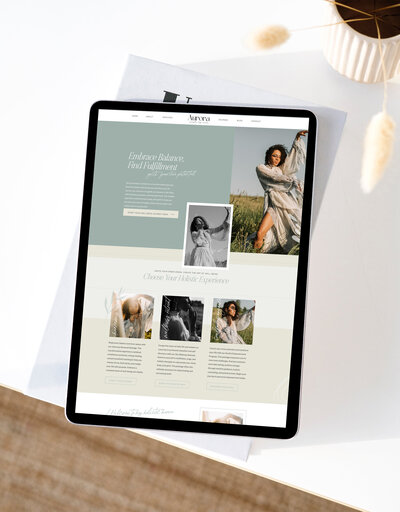
Website in a Week
Fast-track design
Knock off those niggly little design tasks on your to-do-list in as little as 24hrs. Perfect for small business’s needing supporting brand material.

VIP Design Days
choose your path

Struggling to define your brand?
Free resource
Download the Brand Clarity Workbook—a simple, actionable guide to help you refine your identity and messaging.
Get Your Free Workbook